
From the comments to the previous post:
Graeme: I knew this from A level economics in the 1980s. Money is a medium of exchange (1), a unit of account (2) and a store of value (3). Depending on the transaction, one of these things is more important than the others. But the other functions still exist.
(1) and (2) are clearly true. That would apply to things with intrinsic value as well, gold in historic times or cigarettes in prison. "Money" has no intrinsic value (numbers on your bank statement or bank notes or shopping vouchers) but is still (3) a store of value, because it is a claim on something else. The fact that you can swap these for goods and services gives them value. If a shop sells vouchers, it has cash in the bank and an equal and opposite liability to provide goods in future. It does not make a profit by selling the vouchers (unless they lapse, in which case it's a win for the shop and a loss to whoever let them lapse) and the existence of those vouchers does not change the total amounts of goods available to consume now or in future.
Ralph Musgrave: But government/central bank created money (with which the above article started is very different). That is, what exactly does the BoE owe you in respect of your £10 notes? Nothing much!
The BoE is part of the government. When it's time to pay your tax, you could pay it in bank notes which the self-same government printed in the first place. Once you've paid your tax, they could throw all those bank notes on a bonfire. Basic Modern Monetary Theory. The same logic applies to numbers on bank statements, they appear out of nowhere (printing) and disappear into nothing (incinerating).
What's in it for the government and what gives those bank notes value?
You can see them as permission slips to earn money. If you want to earn £100,000 real money in the private economy, you need to acquire £40,000's worth of those permits by the end of the year to hand back as income tax. Even if you invoice only in foreign currencies and earn €110,000 or $120,000 or whatever, you will still need to get your hands on £40,000's worth of permits.
The government puts the permits into circulation by printing them (out of nowhere) and using them to pay public sector salaries, old age pensions, welfare etc (and increasingly, giving money to their mates for nothing in return). Businesses and workers have to get hold of those permits to pay their tax and they do this by providing a certain fraction of their output to public sector workers, pensioners etc in exchange for the permits. Those salaries and pensions transfer output from private businesses to public sector workers and pensioners, which is the whole idea.
If you yourself have more permits than you need to pay tax, you use them to buy goods and services from a business which needs more. The logic applies just as well to rationing vouchers. A non-smoker who wants to bake a cake swaps his tobacco vouchers with a smoker who doesn't need his full quota of eggs or flour. Or the non-smoker can sell them to a smoker and use the cash to buy something else that isn't rationed. The rationing vouchers have no intrinsic value and cost very little to create, but they still have value. Once used, they go on a bonfire.
Monday, 19 October 2020
"Money" again

Sunday, 18 October 2020
"Money and Cryptocurrencies"
From J W Mason's blog:
In the quantity view, “money” is something special. The legal monopoly of governments on printing currency is very important, because that is money in a way that other assets aren’t. Credit created by banks is something different. Digital currencies are a threat or opportunity, as the case may be, because they seem to also go in this exclusive “outside money” box.
But from the Minsky-Mehrling-Graeber point of view, there’s nothing special about outside money. It’s just another set of tokens for recording changes in the social ledger. What matters isn’t the way that changes are recorded, but the accounts themselves. From this perspective, “money” isn’t an asset, a thing, it is simply the arbitrary units in which ledgers are kept and contracts denominated.
The starting point, from this point of view, is a network of money payments and commitments. Some of these commitments structure real activity (I show up for work because I expect to receive a wage). Others are free-standing. (I pay you interest because I owe you a debt.) In either case money is simply a unit of account. I have made a promise to you, you have a made a promise to someone else; these promises are in some cases commitments to specific concrete activities (to show up for work and do what you’re told), but in other cases they are quantitative, measured as a certain quantity of “money.”
Good summary. It's what I've always said. Things like gold or the metal in coins have an intrinsic value, but they aren't "money" in the true sense. True "money" is just a measure of indebtedness. I go to work, my employer owes me my wages. For every hour I work, he owes me a bit more. This accrued debt is formally settled at the end of each month when the balance in his account goes down and the balance in mine goes up. If - coincidentally - I use the same bank as they do, then as regards the outside world, absolutely nothing has happened. It's just a ledger entry.
Thought experiment #1. I am free to agree with my employer that he will pay part of my salary in Tesco vouchers. In which case Tesco's bank balance goes up by the amount he paid for the vouchers. Those vouchers are "money" in the narrow sense (no intrinsic value). I can take them to Tesco and exchange them for food.
Tesco is now indebted to me - they owe me some food. The outstanding vouchers which I haven't used yet show up as liabilities on Tesco's balance sheet and are assets from my point of view, I tuck them into my wallet alongside a few fivers or tenners. Tesco and I are both heartily indifferent whether I pay for my shopping with their own vouchers or with fivers and tenners. If I don't use them this week, I'll use them next week instead.
Or instead of giving me vouchers, my employer could pay Tesco to deliver me certain staple food items each week (and cut the salary payment into my bank account). My employer's bank balance goes down and Tesco's goes up - they now owe me some food, exactly the same as if my employer gave me Tesco vouchers. Once delivered, that debt has been paid (in kind rather than in "money") and we are back to where we would have been.
Thought experiment #2. All bank balances and debts (including govermnent bonds) are simply cancelled, bank notes in circulation are declared invalid. Every adult is given a small amount of the new notes in cash and we all start again. A modified version of this actually happened in Germany in 1948, and it did them their economy the world of good. As unfair as it might seem, did the total real wealth of that country plummet or even change in 1948 (ignoring balances held or owed by foreigners)? Clearly not. One man's loss is another man's debt relief and it cancels out to zero.
It would be quite a different thing if the German government had confiscated all gold in the country and dumped it in the Marianas Trench. Gold has intrinsic value and Germany as a whole would have clearly been a lot poorer afterwards.
Sunday, 19 April 2020
Last night I had the strangest dream
Last night I had the strangest dream
I ever dreamed before
I dreamed the world had all agreed
To be stupid and even more
I dreamed I saw a mighty room
The room was filled with men
And the paper they were signing said
They'd wreck the economy more
And when the papers all were signed
And a million copies made
They all joined hands and bowed their heads
And grateful prayers were prayed
And the people in the streets below
Were dancing round and round
And clapping for the NHS
and banging pans and standing round
Last night I had the strangest dream
I ever dreamed before
I dreamed the world had all agreed
To wreck us all for evermore
Apologies to Simon and Garfunkel.
The above song came unbidden to me this morning. Its been a long time since I felt the need to blog but the extra 1.6 billion pounds that the government is going to give to the local councils ( despite cutting and curtailing their budgets by 3% each year for the last decade or more) just makes me aware that this all could be a nightmare that could have been avoided.
How you ask?

The full link can be accessed here (it's for medical professionals only). Well its a free country. Everyone should read it. and then take at least 10000 iu a day.
Fact is that 2000-4000 iu is woefully inadequate to beat infections. Your body will manufacture 20000 iu if you strip off and lie in the sun at midday in June until you turn slightly pink and you have enough cholesterol for the UVB rays to turn into Vitamin D3.
A bottle of 360 x 10000iu ( thats right 3.6 million units costs £25* (* average) might be less if you bought in bulk). The economy, work, everything that has happened in this country since the begining of March, need not have happened. We need not be in lockdown. The government could have spent £2 billion, which is a drop in the ocean to be honest considering how much they are flinging around willy nilly with no thought to the amount of debt that this will cause the economy.
Bought us all a bottle of that 3.6 million units and told us to all take at least 20000 iu a day to make sure we didnt succumb to Covid 19 and to boost our immunity and therefore protect the NHS, cure a few subclinical cases of rickets, stave off MS and a few other diseases and other viral conditions in the process.
It would have saved money and also saved the economy. We could have been in a better situation economy wise than Sweden and we neednt have had social distancing . By the way the deaths in Sweden are mostly from the Somali community who cant make Vit D in Sweden because they are so dark skinned and need five hours in optimal conditions with all their clothes off. And anyone who knows what Somalis wear in the height of a Swedish Summer will know that that doesnt happen. There have been countless articles asking why the BAME community are overrepresented in the death statistics. This is the reason.
I can probably guarantee you that most of the deaths above 65 were on statins. If you don't have enough cholesterol you cant make Vit D3 from the sun, there's simply not enough. Why are we languishing inside and not enjoying this sunny springtime weather? Because the government said so? Let me remind everyone that is reading here that every atrocity in Germany between 1933 and 1945 was legally sanctioned. By its government. The government and the health service if they had their heads screwed on should have made sure no one was Vit D3 deficient, for years. They knew that everyone was deficient. There have been countless articles since 2010.
Oh and tablets for a fat soluble vitamin? Do you see Vitamin E in tablets No you see it in oil. caps So tablets don't work.
The reason that the government didn't do this is because the pharmaceutical companies are losing profits and want to make a useless vaccine. There are coronaviruses every year, that are common colds. They've been working on a patented cure for the common cold since the 1950s . Unfortunately the only thing that actually works is a high level of Vitamin D3, which makes no money for the companies.
We've been sold down the river... Why have we sacrificed our economy when it had a simple cheap solution?
THINK! it could save your life. 97% of people in the UK are Vitamin D3 deficient. Start asking your MP about this document and why this deficiency which is widespread hasn't been tackled in the last ten years.
Saturday, 4 May 2019
Excellent analogy about "money"
By Tim Youmans on Twitter:
Many years in the future... Earth is now uninhabitable because [reasons]... out of necessity, the people left figured out how to travel light speed, and are heading to a planet orbiting the star Tau Ceti to start over..
(Years into their journey)
Joe: Wait!!! We have to go back!
Kim: Ha! Good one. There is no going back, we only had enough fuel for one trip.
Joe: But we HAVE to!
Kim: What could be so important?
Joe: (mumbling) I forgot the money.
Kim: Huh?
Joe: I forgot the money! OK?
Kim: YOU FORGOT THE MONEY?!
Joe: Yes. I'm sorry..
Kim: You're SORRY? We're heading to a new planet to save our species, and you leave... wait, how much?
Joe: 100 trillion dollars..
Kim: You leave 100 TRILLION DOLLARS(!!) on our old planet with no way for us to get it?!
Joe: Yeah, pretty much.
Kim: I mean... we should just hit the self destruct button! What are we going to do? We get to our new planet full of resources and everything we need to thrive, but HOW ARE WE GOING TO PAY FOR IT?!! My goodness, Joe! You just killed the human species!!
The author concludes that these people would be saved if they understood Modern Monetary Theory, which is besides the point. MMT is just a (very good) explanation of how it works; money will always come into existence, and MMT can explain it, but an understanding thereof is largely unnecessary.
But excellent analogy nonetheless, see also: lefties wailing about all the wealth hidden in tax havens. There is no wealth hidden in tax havens, what is being hidden is ownership of real wealth in real countries.
----------------------------------------------------
My other favourite analogy is rationing vouchers. When they are issued, it is akin to the government printing money and handing it out as Universal Dividends; when you buy food/petrol and hand over a voucher, that is akin to taxation (i.e. unprinting money - presumably they are then physically destroyed). Those vouchers had a certain value, just like coins and notes, because if you didn't need to use all your vouchers, you could sell them to somebody who wanted to consume more food/petrol than their allotted amount.
So in this case, the spending/money printing comes first and the taxation/unprinting comes last. The purpose of the unprinting is to prevent inflation, i.e. if there are more vouchers in circulation than there is food available, the value of each voucher falls accordingly. It would clearly be insane for the government to demand that consumers hand over vouchers when they want to buy food/petrol before any have been printed!
Monday, 4 December 2017
Oh Ho. Here we go...
There is nothing that governments hate more than competition, especially when it comes to the monopoly of money. Hence I am entirely unsurprised by this.
The whole tax evasion / criminality meme is just an excuse. I have no doubt at all that crims are using Bitcoin - but they use cash, especially USD, even more. What was that story I heard about the Medellin narcotics cartel allowing for a 10% wastage in the accounting of their cash balances because rats were eating into its piles and piles of Dollar bills? And the 1930's USA policy of making private gold holdings illegal and demanding that citizens exchange all their gold holdings for paper money?
When governments get desperate they always trend toward totalitarianism.
Thursday, 21 September 2017
We did basic logic at school.
Me, a few days ago:
Rather counter-intuitively, government issued 'money' does not require any asset-backing whatsoever, all the government needs is a system of whereby people HAVE TO hand those notes back to the government which effectively 'unprints' them again. The mistake that the Weimar Republic et al made was not taxing enough.
There followed a lively discussion where people desperately tried to disprove this truism by giving examples of lots of other things that are used as money.
Bayard finished with this supposed killer counter-argument:
For a currency to have value, it simply has to be generally accepted for the payment of debts.
Correct.
The government doesn't have to be involved.
Correct.
There are loads of examples of this: cowrie shells, cigarettes, Maria Theresa dollars, LETS, C18th private currencies, the ones previously mentioned, etc etc.
Correct. But so what?
We did basic logic at school, as well as Venn diagrams. I remember the teacher saying things like "Milk is a drink. But not all drinks are milk. And milk isn't always used for drinking."
In other words, you can't disprove that milk is a drink by saying that whiskey is a drink. And just because people drink milk doesn't mean it can't be used for other things (like making other dairy products).
So let's go back to Bayard's argument part 1:
For a currency to have value, it simply has to be generally accepted for the payment of debts.
Government printed money (be it paper or electronic) has value because it can be used for payment of tax debts. This is why it has value, which is exactly what I said. Those other things are also used as money for various reasons entirely irrelevant to the discussion.
Take a Bond Bug, they are truly shit cars, but you have to pay about £8,000 for one in good nick. Or you could buy a brand new one of these for about £8,000.
So we have two "cars", both worth about £8,000. The Bond Bug has scarcity/sentimental/novelty value. The other has four seats, airbags and a decent stereo. Same basic thing, same value/price, but for totally different reasons. You can't disprove that Bond Bugs sell for about £8,000 by comparing them with a brand new Kia Picanto or vice versa.
Monday, 11 September 2017
Economic Myths: The BBC's brief history of paper money
It's all fine and dandy until this bit:
But the government soon moved stealthily to a fiat system, maintaining the principle but abandoning the practice of redeeming jiaozi for metal. Bring an old jiaozi in to the government treasury to be redeemed, and you would receive a crisp new jiaozi.
That was a very modern step. The money we use today all over the world is created by central banks and it's backed by nothing in particular except the promises to replace old notes with fresh ones.
Nope.
Rather counter-intuitively, government issued 'money' does not require any asset-backing whatsoever, all the government needs is a system of whereby people HAVE TO hand those notes back to the government which effectively 'unprints' them again. The mistake that the Weimar Republic et al made was not taxing enough.
This is most easily explained with rationing vouchers. The vouchers had virtually zero cost of production to the government, were handed out as a kind of universal welfare entitlement and people HAD TO hand them over when they bought food or petrol. The government played little or no part in supplying food or petrol so they were not 'asset backed'.
Some people did not use all their vouchers and other people wanted to buy more food or petrol than their official ration, so would pay for them. That's where the value comes from.
On the day rationing was abolished, all the spare vouchers people had accumulated became worthless. Similarly, if the government had printed far more vouchers than there was food or petrol available, the vouchers would have significantly fallen in value.
It's the same with governments printing money (or its electronic equivalent). For every 'real £' of value you create, collect or spend, the government demands that you also pay X% of that value in 'government £' to the government.
Everybody needs to earn (by producing or collecting rent) and to consume goods and services. So you HAVE TO somehow obtain the permission slips to do in 'government £' from the government (or from beneficiaries of government spending). That's what gives them their value.
So the real economy works backwards from the answer and for convenience, denominates its transactions in whatever the national currency is. It wouldn't matter what 'currency' is used in the real economy (like BitCoin), the government simply converts your BitCoin earnings/spending to its 'government £' equivalent and charges you tax accordingly.
The thought experiment works just as well with any tax, including Land Value Tax. It's basic Modern Monetary Theory.
Saturday, 30 July 2016
This money creation nonsense, to summarise for the umpteenth time.
1. Money is not a thing in itself (like mud or energy or clouds) it is a unit of measurement, like inches measure length, kilograms measure mass and so on.
2. Money is a measurement of indebtedness. If one person has 'money in the bank' that is only possible because somebody else owes the bank money.
3. Gold bugs please note, gold is not 'money' for these purposes, it is an actual valuable thing.
4. Lefties please note, bank notes are an asset, but the flip side is that the government owes the holder that money. Bank notes and government debts are not magically 'debt free'.
5. Banks have very little of their own money, and they don't even have to take deposits to make loans. The loans create the deposits.
- step 1, bank gives one person a cheque (or whatever its electronic equivalent is) to buy a house
- step 2, that persons buys house and gives cheque to the seller
- step 3, seller deposits cheque back with bank.
At end of the day, the banks' loans and deposits have increased by the same amount.
6. So really, banks are just glorified debt collectors, they collect the monthly mortgage payments from all the borrowers and make them available to the depositors. Banks just record a pre-existing state of affairs.
7. It is important to note that total bank lending is limited only by people's willingness to borrow. That is what creates the indebtedness of which money is merely a measure. The banks do not create the indebtedness, they just measure it and make a record of it. To say that banks 'create money' is only true in bookkeeping terms, but they have no more created it than Ole Romer decided what the speed of light is or created it.
8. Consider this simple example, a UK bank sets up a branch in Darkest Africa, how much money can it create? None because nobody has any income to repay anything and there is nothing worth buying.
8. So where does the underlying indebtedness come from? Easy, all adults who do not own land (yet) are deeply indebted to those who own land. The system says that they have to hand over several hundred pounds a month for the rest of their lives merely for the right to walk the earth. That is a massive great debt that each adult is saddled with, which vastly swamps student debts.
9. People who finish uni moan (probably rightly) about being saddled with tens of thousands of pounds of tuition fee/student loan debts. But they ought to realise that they are also carrying a debt of hundreds of thousands of pounds, being all the rent they will have to pay in future. Just because this debt is not written down anywhere does not mean it does not exist. So by going to university, their total initial debts are only one-tenth higher than the initial debts of school leavers.
10. The only way to free yourself from the liability to pay rent in future (a real but unrecorded liability) is to take out a mortgage (a real AND recorded liability), a very similar liability only with, hopefully, a limited number of years until it is paid off, even if that is half a lifetime.
11. So while in bookkeeping terms, banks appear to create money by splitting the zero, banks are just glorified debt collectors on behalf of landowners. The banks did not actually create that indebtedness.
In case I am going too fast, consider a town where everybody has a right to a council house for £80 a week, which is a fair price to pay as it covers the actual physical running costs. How much money/debt is there on paper? None, because nobody in that has a mortgage. Are school and uni leavers in that town saddled with a massive debt i.e. future housing costs? Nope. But what happens if the council decides to sell off all the housing cheaply to their current tenants and not build anymore..?
Wednesday, 20 April 2016
No Pleasing Some People
from The Guardian
To African Americans, Harriet Tubman was our Moses, guiding the enslaved to freedom by faith and the light of the North Star. Why cheapen her by putting her on the face on the 20 dollar bill – the very symbol of the racialized capitalism she was fleeing?
When I first heard about Women on $20s, the unofficial contest to get a woman’s face on a $20 bill, I thought it sounded great: dudes have occupied greenbacks for centuries in the US. The female visages of Sacagawea and Susan B Anthony have been relegated to dollar coins no one gives two cents about.
But now that Harriet Tubman has won the unofficial vote for which woman should replace Andrew Jackson, I am less thrilled. I don’t want to see an abolitionist icon as the face of American money. I am quite content with my mental image of her conducting the Underground Railroad, that secret antebellum network of other former slaves and abolitionists who risked their lives to smuggle slaves out of the United States and into Canada.
We had weeks, or was it months of #OscarsSoWhite. The Guardian will give Lenny Henry every opportunity to talk about how underrepresented black people are at the BBC (he might have a point, but I'd like less Lenny Henry). And here it is, a black woman gets put on a bank note, and well deserved in the case of Harriet Tubman, replacing some very historic white dudes and now the Graun can't just find the good in it. It's like they just like being pissed off and have to find a way to be so.
Wankers.
Monday, 21 March 2016
Fun Online Polls: Sunday opening hours & Paying in cash
The responses to last week-and-a-half's Fun Online Poll were as follows:
For how many hours should larger stores be allowed to open on Sundays? (The current limit is six in England and Wales) None at all - 21%
Less than six hours - 3%
Six hours is about right - 30%
More than six hours - 31%
Other, please specify - 15%
So there appears to a slight majority in favour of increasing the hours, should we just go to seven i.e. open at 10, shut at 5? They've got all day trading in Scotland and the world hasn't collapsed or anything.
---------------------------------
On the topic of shopping, does anybody use actual cash (coins and notes anymore) to pay for stuff? The only times I've paid in cash this year were at our local Chinese takeaway, where they don't accept debit/credit cards.
Vote here or use the widget in the sidebar.
Thursday, 5 November 2015
The War on Cash 2
The Grauniad picks up the idea of the cashless society, meanwhile last week Business Insider had this to say about Sweden:
Sweden is shaping up to be the first country to plunge its citizens into a fascinating — and terrifying — economic experiment: negative interest rates in a cashless society. The Swedish central bank, the Sveriges Riksbank, on Wednesday held its benchmark interest rate at -0.35%, the level it has been at since July.
Though retail banks have yet to pass that negative rate on to Swedish consumers, they face increased pressure to do so as long as the rates remain where they are. That's a problem, because Sweden is the closest country on the planet to becoming an all-electronic cashless society.
Remember, Sweden is the place where, if you use too much cash, banks call the police because they think you might be a terrorist or a criminal. Swedish banks have started removing cash ATMs from rural areas, annoying old people and farmers. Credit Suisse says the rule of thumb in Scandinavia is: ‘If you have to pay in cash, something is wrong.’
Brett Scott in the Guardian thinks the same might happen here:
"There is another – hidden – agenda though. If the only means of holding money is in the form of electronic bank deposits, a central bank can do something it cannot do with cash. It can set negative interest rates to erode people’s money in times of recession, making it costly to hoard it, and thereby theoretically stimulating economic activity. Bank of England chief economist Andy Haldane recently said as much."
Cash is, in fact, a zero-interest loan from the citizenry to the Government. In times of high interest rates this is a good deal for the Government, but if interest rates go below zero, then it's the only money the creditors aren't paying the Government to borrow. If you have a lot of debt, then what better way to pay it down than to get your creditors to do the paying? To do that, though, you have to get rid of cash.
Wednesday, 16 September 2015
Chartalism
It turns out from the various comments to my recent banking post that Modern Monetary Theory is just Chartalism repackaged.
And what the heck is Chartalsim, you ask. It is, again, stating the blindingly obvious, from Wiki:
A prince, who should enact that a certain proportion of his taxes should be paid in a paper money of a certain kind, might thereby give a certain value to this paper money; even though the term of its final discharge and redemption should depend altogether on the will of the prince.
— Adam Smith, An Inquiry into the Nature and Causes of the Wealth of Nations
To give a folksy example, as a matter of fact, the wife and I don't give our children cash rewards for helping round the house and neither do we charge them rent.
But we could give them coloured plastic tokens for helping round the house ('government spending'). Those tokens are of course worthless UNLESS we demand that our children hand back a certain number of those tokens in rent each week and a certain number each mealtime ('paying tax') so that the budget balances. It is the 'taxing' which gives the tokens their value, not the spending.
So, for example, if one child has a shortfall because he or she hasn't helped round the house much, faced with eviction or going hungry, they would have to buy tokens from the other child, either for cash or in exchange for a favour (or just try stealing them). So the tokens clearly have value.
With modern currencies, society has organised itself so that the value of most transactions is measured in terms of the government-issued unit of currency for convenience.
This is not actually essential, we could do all our private trading in terms of dollars or bitcoins or gold or anything else, the government can (and does) collect taxes in sterling (by converting your dollar or bitcoin profits to its sterling equivalent and charging tax on that). The theory works much better if the government collects user charges like LVT rather than taxing income and profits, but that is a separate topic.
While this is all a bit counter-intuitive, it's not difficult to grasp. Think about it, if you go and pay your taxes in cash, the tax officer could chuck those bank notes straight on a bonfire without this affecting anything*; if the government needs more bank notes, it can just print up fresh ones at minimal cost. It's exactly the same with our hypothetical plastic tokens, my wife could collect X tokens each meal time and then put them through a shredder. Those tokens have served their purpose.
* The same as the Bank of England chucking all the UK government bonds it holds onto a bonfire; the government can't owe itself money. Despite what people say.
Thursday, 13 August 2015
Economic Myths: Bank notes in circulation are not government debts.
Re a stupid argument I am having elsewhere, allow me to point out that coins and notes are government debts.
They might be freely transferable, small denomination and non-interest bearing which makes them look different to "government bonds" but in principle they are exactly the same. They record a debt from the government to whoever holds them. The note holder or bond holder has a financial asset and the government (i.e. the taxpayer) has a financial liability. Like all "money" they are not net wealth for the nation as a whole because the asset and the liability cancel each other out.
(I accept, as a matter of fact, that many governments run permanent deficits so some of the notes and bonds are never redeemed, repaid or cancelled, that is a separate issue. It does not mean that they couldn't or shouldn't be.)
Anybody who:
a) disputes, as a matter of logic, that this is the correct way of recording them and/or
b) disputes, as a matter of fact, that central banks do not record them as liabilities
is living in cloud cuckoo land.
See for example Bank of England balance sheet here, which correctly shows notes in issue as liabilities.
If anybody genuinely believes that this treatment is somehow 'wrong' then he can get in touch and tell central banks that they have been doing their accounts wrong since the dawn of time and best of luck with that.
----------------------------------------------
Please note: this is a purely mechanical thing and a description of the real world. I am not making a value judgement or taking sides.
- It does not tell us whether governments should or should not run deficits.
- It does not say whether any of this is a good thing or a bad thing.
- It applies equally to "fiat" currency (whatever that is) and gold-backed currency. With gold-backed currency, a bank note clearly was a government liability, if you wanted you could hand it over and the government was liable to give you gold.
- The way in which 'private' banks split the zero into a deposit and a loan is a parallel topic, although the basic logic is the same.
Monday, 17 November 2014
Fraggle nails it in the comments.
From the comments to the post Money:
The question posed on the thread was: "If money is a “measure of indebtedness”, who is indebted to who when gold coins are used as money? The answer is “no one”. And the same goes for all commodity monies."
Fraggle replied thusly:
Wrong.
The extent to which a commodity is *used and treated as money* is the extent to which it is *no longer a commodity*. It's all about the reason why it is accepted in trade. An item or token is money when it accepted because of the expectation that others *in general* will accept it in trade.
When someone accepts something as money rathen than as a commodity, then for them the transaction is not actually complete, because they haven't yet got what they actually want. What they have is a general claim on stuff.
This claim is what money is a measure of and is equal and opposite to others' de facto obligation to give actual stuff for something that they do not want in and of itself, and it doesn't matter what that something is, nor what it *used* to be for.
Exactly. It's not difficult, is it?
Wednesday, 30 October 2013
"Jane Austen banknote portrait 'surgically enhanced', says biographer"
From the BBC:
A Jane Austen biographer has criticised the Bank of England for selecting a "sexed up" portrait of the author for its new £10 note.
Oxford University fellow Dr Paula Byrne said the 1870 image showed the author with Double-D breasts in a low cut dress, both absent in an earlier portrait composed by the novelist's sister Cassandra showing her as rather flat chested and dowdy.
But the Sun's current editor David Dinsmore, who was consulted by the Bank of England, felt it was a good choice. The Hampshire-born writer was chosen to replace Katie Price on the £10 note.
Friday, 26 July 2013
"Yet the really interesting thing about the tulip boom is that it did not end in universal disaster..
From Andrew Marr's A History Of The World (not the best book ever but well worth £4 if you can plough through it quickly enough so as not to get confused by the fine detail):
... or even in the widespread bankruptcy of Dutch speculators. The Estates General which ran the republic refused to take special measures, and passed the problem back to the civic authorities.
Many towns, in their turn, refused to process or hear any court actions involving the tulip trade, carrying on as if none of it had really happened and allowing the paper losses and the paper gains to wipe each other out.
If the dreams of sudden enrichment were snatched away, so were the nightmares of destitution.
This concept is of much wider application of course and I have alluded to it often enough.
Wednesday, 24 July 2013
Steve Austin to be face of the £10 Note
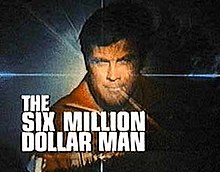
The barely-alive, rebuilt astronaut will be the next face of the note, replacing Charles Darwin, probably in 2017.
In April, the Bank said that the image of Robocop would be put on the £5 note from 2016.
The decision prompted a high-profile campaign against the prospect of no cybernetic people on the currency.
Robocop is set to replace the depiction of the lead fembot on the £5 note. She is currently the only cyborg woman on Bank of England banknotes apart from the borg Queen.


