
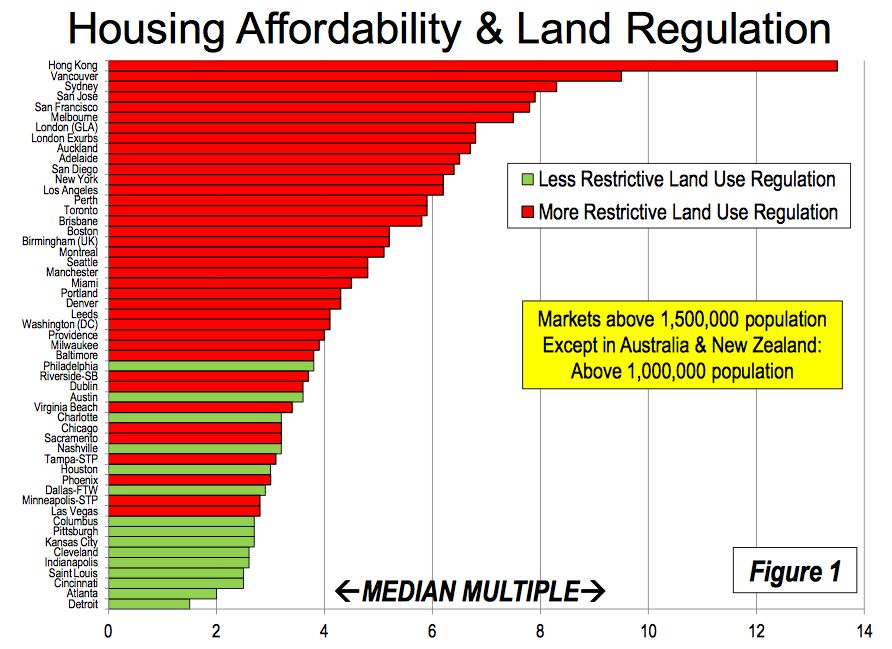
Housing affordability is measured by the Median Multiple, the ratio of median house prices to median gross household income.
In the UK, the MM is 5.1. So this roughly breaks down to median household income of £28,000 and house prices £143,000.
The trouble with this is, it doesn't really tell us about how affordable housing is once we've stripped out taxes and mortgage repayments. That's what is felt in peoples pockets at the end of the day.
So if we do that, we take off about £6,177 for net tax ( benefits netted off) and mortgage repayments £7,248, which leaves us with £14,575 per year to pay all the other bills and expenditures of life.
Which is a pretty small amount. If we use this as our measurement of affordability we get a ratio of 9.8:1 We'll call this the True Affordability ratio.
Now, what happens under LVT? Well simplistically you might say because the mean house prices will half, we'll end up with a Median Multiple of 2.5. So twice as affordable.
Pretty good, but that doesn't tell us the true picture of how LVT will affect True Affordability. Taken from the KAALTVN LTV net liability calculator here, we get the following.

So after-tax income becomes £29,300 minus £3,624 in mortgage repayments equals £25,676 to pay all the rest of life's expenditures.
To get the True Affordability Ratio we divide £70,000 by £25,676, which gives us 2.73
So under LVT, true affordability improves from 9.8 to 2.73, which results in housing being 3.6 times more affordable, as a ratio of discretionary incomes to selling prices.



Arse Dribble
1 week ago
