
A senior sherpa, called Mr Sherpa, on top form. From the BBC:
The Mount Everest region's Sherpas have said they are angry at the way studies of glaciers and glacial lakes have been conducted in recent years. They say the studies do not involve them and that results are often spread through alarmist media reports that cause panic among locals in the area.
"Everytime we begin to forget about the threats from glacial lake outburst, then comes news of yet another study through the radio and television, and this has been happening over and over again for more than 15 years now," said Mr Sherpa.
"Instead of having to fear death like that again and again, we would rather die once if the lake really bursts out one day."
Rumours of glacial lake outburst are also said to be causing panic among the locals. Two months ago, following a television report on the risk of a glacial lake outburst in the region, many families in the lower belt of the Everest region fled their homes overnight.
Mr Sherpa said he and other villagers recently received late-night phone calls from people in a village downstream who were inquiring if the Imja glacial lake had burst.
"We were so scared because they were seeking confirmation from us after they heard rumours that sirens had gone off nearby the Imja lake, and we did not even know if the sirens had already been installed."
Wednesday, 12 September 2012
"We would rather die once than fear death every day"

From a Christian non-conformist think-tank...
Since the economic crisis, people have become increasingly aware of the unfairness of our current tax system. Tax avoidance by corporations and the super-rich gives the appearance that paying tax is an optional extra, whilst low-paid workers have no choice in the matter.
There’s a subsequent desire to come up with forms of tax that are fair, asking most from those who have most, providing the resources needed to fund decent public services. Church Action on Poverty is currently bringing the debate to towns and cities up and down the country through its Tax Justice tour.
For Christians, and all people of faith, there could hardly be a fairer tax than a land tax. If we believe that the earth was created for everybody to share equally, it is hard to justify a small elite benefiting exclusively from large parts of it.
In the UK, land ownership is more heavily concentrated in the hands of a wealthy few than it is in many developing countries. 69 per cent of Britain’s land is owned by less than one per cent of the population. Much of that 69 per cent is in the hands of the aristocracy, which means the current owners have inherited it: ownership is not a result of their own endeavours.
(c) Bernadette Meaden has written about religious, political and social issues for some years, and is strongly influenced by Christian Socialism, liberation theology and the Catholic Worker movement. She is a regular contributor to Ekklesia.
A common misconception
There's an article on 24Dash about possibly improving 'security of tenure' for private tenants by extending the notice period from 6 months to 2 years if the landlord gives them notice to quit, which might or might not be a good idea (seems fair enough to me, I'd also like to reduce the notice period from 6 months to 3 months if the tenant wants to move).
What is striking is this bit:
[The Inquiry] said successive governments have prioritised owner occupation, but it is now in decline.
No they have not, that's exactly what Home-Owner-Ism, an electoral gold mine originally struck by Thatcher but taken to extremes by New Labour, is NOT about. It pretends to be about "prioritising owner-occupation" but actually what it does is "prioritise those people who happen to be owner-occupiers when Home-Owner-Ism kicked off" and shits on all who come after them.
Look at the official stat's from the DCLG (Excel). In England...
- the number of owner-occupier households is only up by 1.4 million since 1991, and is now falling again, we are back down to 2002 levels in absolute terms and back to the mid-1980s if expressed as a percentage of all households.
- the number of social tenant households (council or Housing Association) is down by 0.5 million since 1991. Note: according to those figures, the social housing stock peaked at 5.2 million in 1981 and is now down to 4.0 million, so they 'only' sold off about a quarter of social housing stock.
- the biggest increase is in private renters, up by 2.2 million since 1991, the bulk of that increase was in the last ten years. Some of those will be renting ex-social housing, but by and large, more than half of new homes built in the last twenty years have been acquired by landlords.
It all stands to reason really, the real driving force behind Home-Owner-Ism is the large landowners and banks; the former love collecting rent and the latter would rather lend to BTL landlords than owner-occupiers, it being far less hassle for the bank if a landlord kicks out a tenant who loses his job than the bank having to kick out a mortgage borrower who loses his job.
Great news. So then they won't be needing any more taxpayers money to 'revitalise' housebuilding
From Sky News:
Barratt Developments has reported an increase in annual profit to £191.1m - up 41.6% on the same period last year.
Revenues at the housebuilder - known for its new-builds - increased by 14.1%, while the average sales price of its homes rose from £178,300 to £180,000. It also managed to almost halve its net debt to £167.7m.
Government schemes to boost the housing market and a drive to build new homes on higher-margin land - in the South East for example - boosted its results, the company said. An increase in the number of homes it completed - 12,637 this year compared with 11,078 last year - also helped.
Via Paul at HPC
Tuesday, 11 September 2012
Killer Arguments Against LVT, Not (236)
From The Telegraph:
House prices would be hit and many older people forced to sell family homes (1) by an increase in council tax to "fix the broken housing market", as proposed by an influential think tank today.
Many homeowners might question in what sense the housing market is "broken", when property is one of the few assets that has delivered decent returns (2) in a dismal decade or more for stock markets, pensions and other stores of value.(3)
Alternatively, rising numbers of younger people excluded from homeownership and trapped in ‘generation rent’, may feel that anything which tends to cause house prices to fall must be a good thing.(4)
1) So? Poor Widow sells family home and buys a flat; young family sells their flat and buys a family home. By and large and for many people, this might be just a straight swap with their own children or grandchildren (so the "family home" can "stay in the family", if that's what makes them happy). Why is that so terrible?
2) Typical Home-Owner-Ist circular logic. Yes, houses are a good hedge against inflation. But what they don't mention is that it's Home-Owner-Ism which is the PRIMARY CAUSE of inflation in the first place (and something which I hardly mentioned before):
- Home-Owner-Ism needs credit bubbles to prop up land prices, some of this money spills out into productive economy without increasing output capacity, so this leads to price inflation. For example, a semi-retired person MEWs and buys a new car. This increases demand for cars without increasing amount of work done.
- When Homey bubbles pop, the government quite deliberately and maliciously tries to create inflation in order to mask real house price falls. This trick worked fine in the 1970s when we still had currency controls, it doesn't actually work without them, e.g. Japan over last twenty years, the UK today.
- Homeys just luuurv those ultra-low interest rates, which of necessity trigger speculative bubbles in commodities which tend to push up price inflation.
- If you can't tax the rental value of land, you have to tax production and output instead, these taxes tend to push up prices (at least, relative to net incomes) and reduce output.
So what these shits really are saying is "Home-Owner-Ism causes inflation. Inflation is bad unless it's in house prices. So we need even more Home-Owner-Ism."
3) Other "stores of value"* have done so badly precisely because of Home-Owner-Ism.
If we'd got it over with and shifted from taxing production and output to taxing the rental value of land ten or fifteen years ago, the dust would have settled by now. Houses would have performed badly, viewed as a speculative investment, but shares would have doubled, interest rates and hence annuity rates would be much higher, price inflation would be more or less non-existent (sure, food is getting more expensive but electronics are getting cheaper, it would cancel out to nothing), fewer unemployed, far milder recession etc.
Once LVT has bedded in (i.e. once all the Poor Widows In Mansions, of whom there are several thousand in the UK have down-sized), everybody will have got used to the idea that land is useless as a speculative investment; that debts will not be eroded away by inflation; that share prices tend to go up; sticking cash in the bank is a good way of saving; and that it's worth saving up for an annuity, because you'll get 10% a year.
When we tell our children and grandchildren that people used to believe that you could become rich without working, just by buying a bit of land and keeping your fingers crossed (and that a lot of people did become rich this way) they will think you are mad.
"Yes, but how did you pay the tax on the land if you were not working?" they will ask.
"There wasn't any tax on land in those days," you reply.
"Wot? So where did the government get money from?"
"Ah... they used to tax people who went to work instead, and give the money to the people who owned land... Jesus, this sounds really stupid now I say it."
* We can make an exception for gold, the gold price has done very well because a lot of the measures which governments are taking to subsidise land owners stimulate the economy spill over into higher gold prices.
4) Well, at least he admits that Home-Owner-Ism is inter-generational warfare. Remember: the person who starts the war doesn't necessarily win it.
Jospeh Rowntree Foundation takes tentative first steps...
From their report summary:
Volatility has plagued the UK housing market for four decades. The JRF Housing Market Taskforce identified ways to create a more sustainable housing market. This paper presents a progress report, and highlights key priorities for the Government.
Key points
The Government should*:
• Conduct a revaluation of property for Council Tax purposes with a view to gradually transforming it into a national land and property value tax, following full modelling to identify difficulties and to inform its design.
• Ensure the Financial Policy Committee has the power to introduce mortgage credit controls, and that the housing market as a whole is monitored as a threat to wider economic stability.
• Monitor the FSA’s new mortgage rules to ensure they do not unnecessarily exclude low risk borrowers from the housing market, collecting the necessary data to do this and formally reviewing the rules after three years.
• Introduce a more effective safety net for home-owners that shares responsibility fairly between home-owners, lenders and government.
• Switch the emphasis of housing subsidies away from a reliance on Housing Benefit towards housing supply, as part of a new model for financing new affordable housing.
Three out of five ain't bad.
* Yes I know we can ignore arguments based on "should", but firstly I'm quoting and secondly this is their recommendations based on facts, evidence and so on.
"Sixty-one million Brits stay away from London's biggest ever street party"
From The Daily Mail:
Sir Chris Hoy got a ‘little bit emotional’ once more on Monday as the vast bulk of the UK population stayed away from the streets of central London to get on with their lives instead saluting Great Britain’s Olympic and Paralympic teams.
Mind you, the tedious concoction of sport we have been beaten about the head with this summer has a habit of turning all of us off. Olympic long jump champion Greg Rutherford - who, frankly, can go take a running jump - was ‘teary’ and David Weir - the apparent hard man who won four Paralympic gold medals, well, they call them gold they're just iron painted to look gold - admitted he, too, had a ‘good cry’ after winning the T54 marathon on Sunday. He'd be no match for a T-900, I tell you.
Monday's parade of athletes was hopefully our last chance to see Britain’s Olympians and Paralympians side by side, given the killing their performances have merited over the last six weeks.
It was about ignoring the rather feeble achievements of ‘the best athletes that have ever put on a British vest’, I mean, they can run quickly, throw lumps of metal and jump in sand pits, so what, saying ‘thank you’ for the £13 billion which the affair seems to have cost us so far.
It was also an opportunity for the team to be faced with the stark fact that the vast majority of the UK had no ‘joy on their faces’, as Hoy put it. But it was more like a mutual appreciation society as they and the flag-waving British public licked each other's windows in some pointless spiral of adulation; the mugs who worked for free as Games Makers, the ever-smiling volunteers who lined The Mall and the servicemen and women, police and security staff who had kept them marginally less safe than they would have been if the Olympics had been held elsewhere.
Hoy, who won two gold medals, like I said, not gold at all really, scrap value £4 I've heard, in London to become the most successful British Olympian of all time, said:
"You looked at the sheer volume of people who stayed at home, in school or at work and it was our chance, as athletes, to wonder where it all went wrong. There’s an amazing response that these little worthless lumps of metal, the medals, have with them. It is a surreal thing to experience when you see hundreds of thousands of people ignoring you, taking part in a much larger common celebration that it was finally - hopefully - all over.
"I honestly thought four years ago it couldn’t get any bigger when over a billion Chinese stayed away from the Beijing Olympics, and this was on a different scale, with only just over sixty-million Brits staying away. When you looked down a side street you could see a mass of people hurriedly disappearing into the distance when they realised we were coming. This is another day that will stay burned in my memory when I'm crying myself to sleep."
Monday, 10 September 2012

Stone Mason: Egypt needs "Giza Necropolis" approach to economy
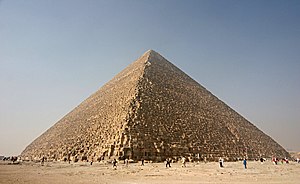
He said that the success of the construction of the tomb for the Pharoah to travel to the stars in the afterlife showed that targeted funding could work if directed at sections of the Egyptian economy. Speaking at the annual union conference in Memphis, he said the Pyramids proved the "market doesn't always deliver" and vindicated the state's role in the Egyptian economy.
"It's right to celebrate the Pyramids, but it's even more important to learn from them, for the central lessons of these 20 years – that private isn't always best and the market doesn't always deliver – surely need to shape future policy," he said.
"We can't muddle through with our trip to the afterlife – we need investment, planning and a Giza-style national crusade. We won't build up industrial strength unless we work out what we do best as a country, whether it's temples to Isis, Osiris or Horus"
He said the rest of the Egypt also needed a Giza-style infrastructure boost, not just in terms of burial tombs, but also in new palaces.
Fun Online Polls: Threats to trees & Mazda MX5 drivers
Thank you everybody who took part in last week's Fun Online Poll, results as follows:
What is the biggest threat facing the UK's trees?
Don't worry about it, they'll be fine - 53%
Horse chestnut bleeding canker - 21%
Acute oak decline (AOD) - 9%
Great spruce bark beetle - 3%
Phytophthora ramorum - 1%
Chalara dieback of ash - 1%
Other, please specify - 10%
Suggestions for "Other" included "Home-Owner-Ism", which I think is a bit far fetched, even by my standards, and Walter The Softie had this to say: "All of the above and together they will change the face of our streets, woodlands and forestry. Forever. They won't be fine but I'm not sure there's anything we can do about it, other than start liking sycamore."
So now we know.
------------------------------------
Her Indoors announced a while ago that she'd like us to buy a Mazda MX5 (preferably automatic as she doesn't have a proper driving licence, which seems like a bit of a contradiction in terms to me, a sports car with automatic transmission).
So I started paying more attention to them, and what strikes me is that Mazda MX5 seems to tbe sports car of choice for older people (i.e. I've not seen an MX5 driver yet who is younger than I am), so they are presumably for those people who chicken out of spending their life savings on a Harley Davidson when they have their mid-life crisis and who go for an affordable, practical little sports car instead.
Something else I've noticed is that I'm overtaking an MX5 as often as an MX5 overtakes me. Bearing in mind that I am Mr "Stay in the middle lane and do 65 mph to 70 mph" this seems to be missing the point of having a sports car somewhat, doth it not?
So that's this week's Fun Online Poll.
Vote here or use the widget in the sidebar.


