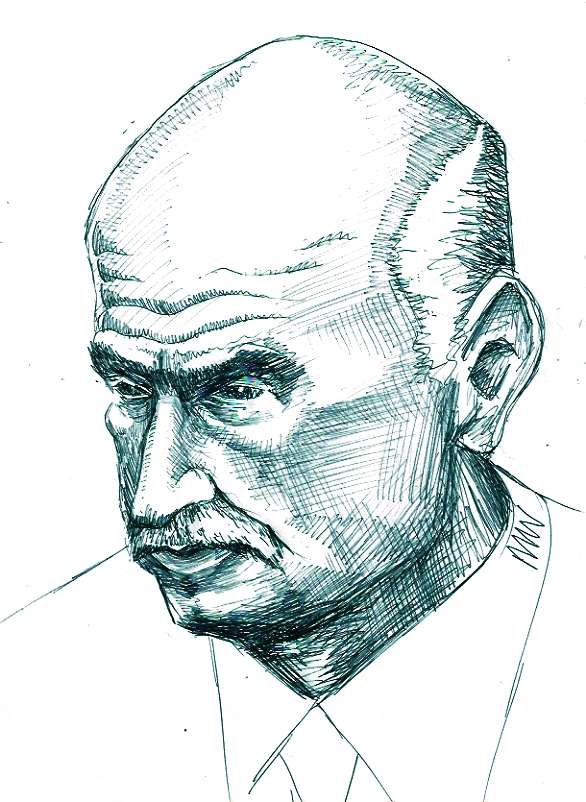
As an update on my earlier post I read somewhere recently (on the DT but I can't find the link now) that the ECB purchased VW bonds as part of its QE program. That is the ECB bought packaged up auto finance loans from VW.
IMHO this does not make the practice any better. It's still crony financing of industry favourites by the simple expedient of the ECB expanding its balance sheet, which it can do ad infinitum. It creates money ex nihilo and uses it to buy VW's bonds. This is money for nothing. It's very similar to Help to (Buy) Sell, in that it is an indirect subsidy to producers (land owners under HtB).
Of course all this brings into question the GDP figures for the Eurozone. If these are being boosted by QE, they must be meaningless since there has been no 'real' growth. Just lots more money pumped into the system.
It's an outrage and it's not going to end well. Is it?
Or, as usual, am I missing something?
Wednesday, 30 September 2015
The ECB and VW
Posted by
Lola
at
10:59
36
comments
Tuesday, 23 June 2015
Free markets or subsidy junkies?
From Business Insider:
European markets rocketed upwards today on some sudden and positive hints of a Greek bailout deal at today's emergency European summit.
The Greek government is trying to negotiate a billions of euros in bailout money, and for the first time in weeks there are genuine signs of positive developments today. Athens stocks led the way — the index recorded a dramatic rise of 9% on Monday...
And so on and so forth.
So basically, share prices depend to a large extent on the continuation of the massive subsidies which somehow trickle their way from ordinary taxpayers and ordinary bank customers, via the Greek government and ultimately back to various large European banks (for whose benefit this whole show is being organised).
So while the stock exchange as such is a free market (anybody can buy or sell), a large part of what is being bought and sold is corporatist welfare.
Posted by
Mark Wadsworth
at
10:16
5
comments
Labels: Banking, ECB, Free markets, Greece, IMF, London Stock Exchange, Subsidies
Monday, 27 August 2012
Running the European Central Bank is such a draghi
Posted by
Mark Wadsworth
at
12:28
0
comments
Labels: Banking, Caricature, ECB, Mario Draghi, Subsidies
Tuesday, 12 June 2012
Not waiving but drowning.
Posted by
Mark Wadsworth
at
21:41
1 comments
Labels: Banking, Caricature, ECB, EFSF, ESM, EU, Mariano Rajoy, Spain
Monday, 11 June 2012
"Q and A: How will the Spanish bailout work?"
From City AM:
Q: How does the bailout work?
A: The funds can only give money to governments, not banks. That means the Spanish government will take the bonds and pass them on to the banks. They will then pass them to the European Central Bank in return for liquidity, solving their current problems.
In case that's not clear, they add a helpful flowchart:
What's the point of that then? The EFSF/ESM and ECB are all more or less the same thing (they can pretend as much as they like that they aren't). So don't they just give the "liquidity" (whatever that is) straight to the Spanish banks?
Wednesday, 22 February 2012
More wilful misreporting of Greek bail out
by The Metro:
After more than 12 hours of gruelling talks, eurozone ministers agreed a £200billion rescue deal that would save the country from bankruptcy.*
As part of the plan, £90billion of debt will be wiped out and interest rates on loans will be slashed. A further £108billion will also be loaned to the country to help it get back on its feet.
In exchange, Greece has agreed to cut pay, public sector jobs and spending as well as find £270 million of savings** in this year’s national budget. Next month, the IMF will decide how much to contribute to the package but if it is the same as last time, Britain could be made to hand over £1.6 billion***.
Nope, you cannot add £90 billion to £108 billion; you have to deduct £108 billion from £200 billion to arrive at the real answer +/- £90 billion, which is the value of debts from which Greece has been released.
What happened was that the EU/ECB/IMF gave existing existing creditors (who were owed £200 billion) £108 billion and told them to clear off, so now Greece owes the EU/ECB/IMF £108 billion instead of owing the existing creditors £200 billion.
* Countries can't and don't go bankrupt. They either default or are subsumed into a larger country, by consent or by force.
** To put £270 million into perspective, Greece's population and GDP are approx. one-fifth of the UK's, in other words, £270 million in their terms is £1.4 billion in our terms, i.e. still peanuts.
*** We will, hopefully, get most of that £1.6 billion back, sooner or later, as it is a loan not a gift; further, the chances are that this £1.6 billion will end up being paid to UK banks anyway. So this is not A Good Thing but it is hardly A Disaster, given the scale of UK bank bail outs so far.
Posted by
Mark Wadsworth
at
09:59
2
comments
Labels: Accounting, Banking, ECB, EU, Euro-zone, Finance, Greece, IMF
Monday, 2 January 2012
I'm from the European Central Bank and I'm here to help.
Posted by
Mark Wadsworth
at
17:13
2
comments
Labels: Caricature, ECB, Euro, Goldman Sachs, Mario Draghi
Saturday, 31 December 2011
Splitting the zero
Two common misconceptions about banking are that:
a) Banks can create money out of thin air.
b) Banks take money from depositors and then lend it to borrowers.
There is a small element of truth to either, but clearly they are contradictory
a) If banks can create money out of thin air, then how could there ever be a run on a bank? How could banks ever be short of 'capital'?
b) Why would banks bother waiting for people to deposit money before lending it on if they can just create it?
So there must be 'something else' which most people have overlooked which bridges the gap between the misconceptions. That 'something else' is a golden rule of economics generally which is that for every liability there is an asset. It is not true to say that for every asset there is a liability*, but it is certainly true to say that for every financial asset there is a financial liability (and liabilities are of course usually financial liabilities as most debts are to be repaid in cash rather than in kind, i.e. if you have been paid in advance to do a job).
In bookkeeping, there is also the 'balance sheet rule' says that any corporate entity has both assets and liabilities and they net off to precisely £nil. Yes of course, successful companies have share capital and retained profits, which do not have to be paid out, but those are still liabilities - that money (or that value) does not belong to the company, it belongs to its shareholders.
Onus Probandy had another crack at explaining how banking and double entry bookkeeping work using his analogy of splitting the zero again recently, but he made it a bit complicated by using the ECB to illustrate the point.
i. A far simpler way of explaining banking, the golden rule, double entry bookkeeping and 'splitting the zero' is to remind people what happens when you go to the bank to take out a personal loan for (say) £10,000.
ii. Assuming you pass the credit checks etc, the bank creates two accounts for you - a deposit account and a loan account, and it simultaneously credits £10,000 to the deposit account and debits £10,000 from the loan account. No coins and notes change hands, nobody had to deposit money first, nothing, the banks just 'splits the zero'.
iii. So you, the customer, now have a financial asset (£10,000 in your deposit account, which you can withdraw and spend) and an equal and opposite financial liability (£10,000 owed on your loan account, which you will have to repay).
iv. As mentioned above, a golden rule is that one man's financial asset is another man's financial liability*. So your asset (the deposit account) is a liability from the bank's point of view (you can wander into the bank and withdraw cash, or you can make payments to other from that account), and your liability (the loan account) is the bank's asset (they will receive money from you in future as you pay off the principal and interest).
v. We can illustrate this by drawing up a balance sheet at each stage for you and for the bank, see 1) and 2) below.
vi. The balance sheet in 3) is the overall picture taking you and the bank together, you can draw diagonal lines between your asset and the bank's liability (the deposit account) and your liability and the bank's asset (the loan account). The overall position immediately after the loan is made is still a big fat £nil on all sides.
vii. "Why do the banks lend money then?" you may ask, "Their net wealth does not increase when they split the zero." Well, that's because they can charge you 6% interest on the loan and they only pay you 2% interest on the deposit. Of course, you will withdraw the money from the deposit account, spend it in the shops and the shop keeper (or his suppliers, employees etc) will pay it back in to the banking system as a deposit. So until and unless the loan is repaid, the bank will be earning £400 in interest margin. Whether you repay your loan or whether the shop keeper in turn repays a loan he had taken out earlier makes no difference - at this stage, the assets and liabilities merge into one and turn back into zero again.
viii. So what banks really want to do is to ensure that the two sides never merge into zero again, by tricking people into taking out ever larger loans, and making sure that loans are only repaid by somebody else taking out an even bigger loan. There are only so many flat screen TVs you can buy and so many foreign holidays you can go on before either
a) you reach the limit of your own willingness to get further into debt or
b) the bank no longer sees you as a good credit risk.
So the tried and tested method is house price bubbles. There is no such thing as net land wealth, of course*, so all a house price bubble means is that banks are earning more and more money for doing nothing but carry out a huge great confidence trick.
* Footnote: The modified rule that for every asset there is a liability (as it applies to financial assets and financial liabilities) also applies to land, because one man's rental income is another man's rental expense; even if you are an owner-occupier, the land only has value to you because being excluded from that plot places an equal and opposite burden on 'everybody else'; alternatively, the value to you is that you alone are not subject to this burden.
By analogy, let's imagine that the playground bully takes ten pence from every other child in your class every day, that's the bully's asset/income and every other child's liability/expense. But one day, you do him a favour (like giving him an alibi), and so he stops taking money from you. You might consider yourself to be ten pence a day richer than all the other children, and indeed you are, but only because you are neither payer nor recipient of ten pence (like an owner-occupier). If the bully later gets expelled, you cease to be ten pence a day richer than all the other children and your 'wealth' disappears.
The modified rule clearly does not apply to buildings and improvements on land, as there is no such thing as a negative building or a negative improvement, and if one person builds a building, he does not impose a burden on other people. He might diminish the rental value of neighbouring plots of land by building the building, and most bits of land ultimately belong to other people (who thus might feel themselves burdened by the building), but...
a) Unless the planning department is staffed by complete idiots, the increase in the rental value of his land/buildings is at least equal to the fall in the rental value of neighbouring plots (so worst case, total rental values are the same) and
b) More subtly, by reducing the rental value of those neighbouring plot, he also reduces the burden which being excluded from those plots places on 'everybody else'.
The new building is real net wealth and the change in net land wealth is precisely zero because it was zero before and is still zero afterwards.
Posted by
Mark Wadsworth
at
14:11
14
comments
Wednesday, 28 December 2011
What's the point of that then? (2)
Anon alerted me to this in The Daily Telegraph:
Fearful banks parked a record €411bn (£344bn) with the European Central Bank (ECB) last night in a further sign that Europe's financial institutions are becoming increasingly wary of lending to each other.
The record amount was deposited just a week after the ECB lent 523 eurozone banks a total of €489bn in cheap loans in an attempt to keep credit flowing through the economy and prevent a full-scale credit crunch. Banks borrowed the money at the ECB's benchmark rate of 1pc, but receive an overnight rate of just 0.25pc, well below what they could earn in wholesale markets.
This means lenders are depositing any new cash back with the ECB at a loss in order to guarantee safety.
There's not much I can add to that, except to note that maybe this is how the ECB borrowed the money which they lent out a week or two ago, and the ECB is taking a 0.75% cut as insurance for guaranteeing inter-bank lending between banks with spare cash and banks with not enough cash, which seems perfectly fair to me.
The other possible explanation is that there are banks so stupid that they borrow money from the ECB with the sole purpose of depositing it back with the ECB.
Posted by
Mark Wadsworth
at
12:47
7
comments
Labels: Banking, Central banking, ECB, Euro-zone
Wednesday, 21 December 2011
What's the point of that then?
From the BBC:
Eurozone banks have rushed to take out cheap three-year loans offered by the European Central Bank, borrowing 489bn euros ($643bn; £375bn). The central bank had hoped to lend up to 450bn euros to stop another credit crunch crippling the banking system. When the plan was announced, French President Nicholas Sarkozy said banks could use the money to invest in eurozone sovereign debt.
Right, so the ECB, which is explicitly or implicitly backed by EU member state governments, has borrowed money from sources unknown the German central bank* (it has no real money of its own) and lent this to commercial banks cheaply, in the hope that the self-same commercial banks will then lend the money back to EU member states, thereby presumably generating a profit for themselves?
Yes, I know Article 123 of the Lisbon Treaty the EU Constitution says that member states aren't supposed to lend directly or indirectly to other member states** (since when have they ever cared about their own rules?), so they can't just brazenly cut out the middleman, but isn't the transaction entirely circular anyway?
If you strip out the commercial banks as middlemen, all that is happening is that member states have clubbed together to create their own supra-national central bank, the ECB and are not only financing this but also borrowing from it.
-----------------------------
* UPDATE: Ralph Musgrave emailed me that bit.
** UPDATE, Denis Cooper has emailed me to say this:
It's Article 125 which prohibits member states from becoming liable for or assuming the commitments of other member states, while Art 123 prohibits the ECB from direct purchases of debt instruments, but there's also Art 124 preventing
"Any measure ... establishing privileged access by ... central governments ... to financial institutions ... " and if the ECB is lending money to banks specifically to lend on to governments then that seems to me to be "privileged access".
Then there are articles about "the principle of an open market economy with free competition, favouring an efficient allocation of resources" and the ECB conducting "credit operations with credit institutions and other market participants, with lending being based on adequate collateral", and it seems that all of that is being disregarded so it's hardly worth reciting all the details.
Posted by
Mark Wadsworth
at
12:23
21
comments
Labels: Banking, Central banking, Corporatism, ECB, Sarkozy
Thursday, 3 November 2011
Well, duh!
From City AM:
THE FIRST bond issue by Europe’s bailout fund since it was given new powers was postponed yesterday on fears that there is not enough investor appetite for its debt.
Initially the fund, the European Financial Stability Facility (EFSF), had planned to raise €5bn (£4.3bn), before cutting the size of the issue to €3bn earlier this week and then postponing it entirely yesterday.
A banker close to the deal told City A.M. that the EFSF feared there was too little interest from investors, despite a spokesman blaming "market conditions"...
This will hardly be a surprise to anybody who's bothered to look at the numbers. That much vaunted €440 billion (or €1 trillion or whatever) is still a long way off, eh?
Wednesday, 2 November 2011
Γιώργος Παπανδρέου
Posted by
Mark Wadsworth
at
21:01
6
comments
Labels: Caricature, ECB, EFSF, George Papandreou, Greece, IMF
Thursday, 27 October 2011
€440 billion bail out fund actually has less than €3.5 billion
Compiled by Denis Cooper, lengthy but worth a read:
---------------------------------------
The EFSF "bail-out fund" does not actually have anything like the €440 billion which the media keep describing as its "firepower", its "reserves" or its "funds" as Robert Peston pretends here.
The EFSF operates by borrowing money and lending it on. Its subscribed share capital was minimal - less than €29 million, and I do mean million not billion, as can be checked on page 4 of the Articles of Incorporation.
So far it has borrowed a total of €13 billion through three bond issues (you may have to go click 'I agree' to get to that screen) and it has disbursed a total of €9.5 billion to Portugal and Ireland, on which basis it will presently have less than €3.5 billion to hand.
It's not an EU body; in fact it's a Special Purpose Vehicle, a private company, as explained in here
A1 - What is the EFSF?
The European Financial Stability Facility (EFSF) is a company which was agreed by the countries that share the euro on May 9th 2010 and incorporated in Luxembourg under Luxembourgish law on June 7th 2010. The EFSF’s objective is to preserve financial stability of Europe’s monetary union by providing temporary financial assistance to euro area Member States if needed.
On June 24, the Head of Government and State agreed to increase EFSF’s scope of activity and increase its guarantee commitments from €440 billion to €780 billion which corresponds to a lending capacity of €440 billion and on July 21, the Heads of Government and State agreed to further increase EFSF’s scope of activity.
Describing the EFSF as SPV1, one of the two options being considered is to set up a second SPV, call it SPV2, as explained in this official factsheet.
Under this model, a special purpose vehicle (SPV) would be created centrally or in the beneficiary member state, combining public and private capital and funding for extending loans for bank recapitalisation (via a Member State) and/or for buying bonds in the primary and secondary market.
The SPV structure would be set up so as to attract a broad class of international public and private investors with different risk/return appetites. The EFSF would provide the equity tranche of the vehicle and hence absorb the first proportion of losses incurred by the vehicle.
So SPV2 would also operate by borrowing money with SPV1 in effect indemnifying those "international public and private investors" against losses if SPV2 loses money on its business of "extending loans for bank recapitalisation ... and/or for buying bonds in the primary and secondary market", but with SPV1 only indemnifying the SPV2 investors for consequential losses on their investments up to maybe 20%.
As investors are already becoming wary of the bonds issued by SPV1, when it has only borrowed €13 billion so far - which have lost between 3% and 5% in value as at a couple weeks ago - how likely is that they'll believe that if they lent SPV2 say €1 trillion to keep Italy, Spain etc afloat, and if/when that bail-out attempt failed SPV2 suffered losses of say €200 billion, nevertheless SPV1 could then borrow €200 billion from investors to make sure that the SPV2 investors were paid on time and in full?
And given the 50% losses on Greek bonds, how likely is it that under those circumstances the losses incurred by SPV2 would exceed the 20% guaranteed by SPV1, even if it could borrow enough to meet that guarantee? On the whole I think I'll keep my money in the building society, rather than investing any of it in either SPV1 or SPV2.
Thursday, 29 September 2011
"A burning building... with an exit"
Denis Cooper emailed me his letter to The Telegraph with permission to reproduce. To cut a long story, the EFSF has no legal base in the EU treaties anyway, and its proposed permanent successor the ESM cannot be set up until the EU Treaty is amended (which requires UK consent).
Our MPs could stop the ESM coming into force by blocking the forthcoming Bill to approve the amendment (as proposed by Decision 2011/199/EU). With that EU treaty change killed off, it couldn't be used for any other purposes, including agreeing to a Tobin tax in the eurozone (or imposing it on UK banks, for that matter).
Here's his letter in full:
Sir
If European Commission president Jose Manuel Barroso wished to introduce a financial transactions tax just in the eurozone (editorial, today), then he could probably do that without needing any further EU treaty change beyond that already [provisionally] agreed [but not yet ratified] on March 25th.
Such a tax could easily be represented as one component of a "stability mechanism" to "safeguard the stability of the euro area", and would therefore fall within the scope of the new paragraph which would be inserted into the EU treaties through European Council Decision 2011/199/EU "amending Article 136 of the Treaty on the Functioning of the European Union with regard to a stability mechanism for Member States whose currency is the euro".
Therefore under that EU treaty amendment the eurozone governments could agree among themselves to impose the tax just within the eurozone, and as the UK would not be a party to that intra-eurozone treaty or agreement it would have no say over its contents and would have no veto to exercise.
I wonder whether the government will now reconsider the wisdom of so readily assenting to European Council Decision 2011/199/EU back in March, and decide that it will not proceed with the Act of Parliament which is necessary before it can be finally ratified by the UK.
Yours etc
NB. European Council Decision 2011/199/EU is here. It would insert this paragraph into the EU treaties: "The Member States whose currency is the euro may establish a stability mechanism [the ESM] to be activated if indispensable to safeguard the stability of the euro area as a whole. The granting of any required financial assistance under the mechanism will be made subject to strict conditionality." which could easily be interpreted as giving the eurozone state governments the right to agree to a financial transactions tax just within the eurozone.
Monday, 26 September 2011
Fun Online Polls: Car washes and Greek bail-out madness
There was a good turnout for last week's Fun Online Poll, thanks to everybody who took part. Results as follows:
How often do you wash your car?
The rain washes it - 35%
More than once a year - 25%
I don't own a car - 20%
Shortly before I want to sell it - 8%
More than once a month - 4%
Other, please specify - 7%
I must admit there was no reason for running this poll apart from me being nosey, and I'm delighted to see that I'm in the au naturel majority on this one.
I am surprised at how many respondents say they don't own a car: I'm really not sure what to make of that. Bonus points for best most inflammatory comment goes to John Pickworth: "Car washing, like ironing clothes is a waste of life."
--------------------------------
This week's Fun Online Poll, which may end up being superseded by events, is "How much longer will they manage to keep Greece in the Euro-zone?"
The whole thing strikes me as beyond the point of insanity - Greek's outstanding government debts is in the order of €350 billion, and they can easily afford to pay about half of that, so why on earth do the EU, IMF, ECB, EFSF whoever, need a fund of €440 billion, which They magically hope to 'leverage up' to €2,000 billion to cover the losses? Who in his right mind is going to lend a €440 fund, which is more than enough to cover the losses, another €1,560 billion, knowing that a tenth of that money will just disappear in a puff of smoke?
For sure, They also want to bail out French and German banks, and to bail out the people who lent money to the other PIIGS etc, but why subscribe to something which is guaranteed to lose you money? Unless you're investing somebody else's money and are on a decent kick back, of course? Why do They think that we will fall for this? Questions, questions...
Vote here or use the widget in the side bar.
Tuesday, 20 September 2011
This whole central banking lark is trichier than it looks
Posted by
Mark Wadsworth
at
22:31
1 comments
Labels: Caricature, Central banking, ECB, EU, Greece, Jean-Claude Trichet
Monday, 8 August 2011
Fun Online Polls: The Saturdays and financial markets doolally
Last Friday's Fun Online Poll was a damn' close run thing:
Who is your favourite out of The Saturdays?
Frankie - 3 votes
Molly - 2 votes
Rochelle - 2 votes
Una - 0 votes
Vanessa - 0 votes
They're all identical, aren't they? - 1 vote
Who or what are 'The Saturdays'? - 56 votes
Frankie is the second one from the left in this picture. I think that was the right decision.
---------------------------
Financial markets doolally, yawn, vote here or use the widget in the sidebar.
Thursday, 14 July 2011
A sensible plan
From Business Recorder:
The euro zone may be starting to get to grips with the Greek crisis. The idea of bond buybacks by the European bailout fund is back on the table. The European Financial Stability Facility could lend to Greece to buy its own debt back... The idea isn't entirely new: it was mooted last year before being shouted down by Germany, which saw the plan as a backdoor way of making other countries take on Greek debt...
A buyback could genuinely bring down Greece's debt. It could be done in conjunction with lower interest rates on Greece's bailout loans, and some form of extension of bond maturities. This three-way formula could pave the way for compromise between the ECB and euro governments.
Greek debt is trading, on average, at about 55 cents on the euro. A buyback of all the country's debt at that price would cut the country's debt load to 87 percent of GDP, lower than Portugal or Ireland.
I have been told that it is considered very ungentlemanly for a country to buy back its own debt at a discount to face value, but needs must.
To do it properly would require a lot of connivance and cloak and dagger stuff and saying one thing and doing another (in which Greece are past masters). Ideally what Greece would do is openly go out an borrow another €175 billion from the ECB or IMF (or whomever), pushing its nominal debt-to-GDP to something silly like 250% of annual GDP. While ostensibly pissing this money up the wall, as per usual, they would actually squirrel it away somewhere safe.
Let's assume the market value of the old outstanding debts falls even further to half its nominal value of €350 billion. Greece would then, very carefully and using lots of nominees, buy up all the outstanding debt which comes on the market, taking care not to push up the price again. It can easily keep the market value down by publishing horrendously bad figures for unemployment, deficits, fall in GDP, allowing a couple of its banks to go bankrupt and so on.
Once it has bought back most of its old bonds, it can merrily shred and burn them, hey presto, old debts exitinguished and it now only owes the €175 billion figure mentioned above.
Posted by
Mark Wadsworth
at
14:16
16
comments
Labels: ECB, Euro, Greece, Interest rates, Speculation
Monday, 20 June 2011
My Big Fat Greek Finance Minister
Posted by
Mark Wadsworth
at
20:58
2
comments
Labels: Caricature, ECB, Evangelos Venizelos, Finance, Greece, IMF
Saturday, 18 June 2011
Buddy, can you spare me a Euro? Well, about a hundred billion, actually...
Posted by
Mark Wadsworth
at
10:27
6
comments
Labels: Caricature, ECB, EU, Euro-zone, George Papandreou, Greece, IMF